From France to Ghana: The Best Ways to Send Money Online (Zero Fees)
16 February 2026
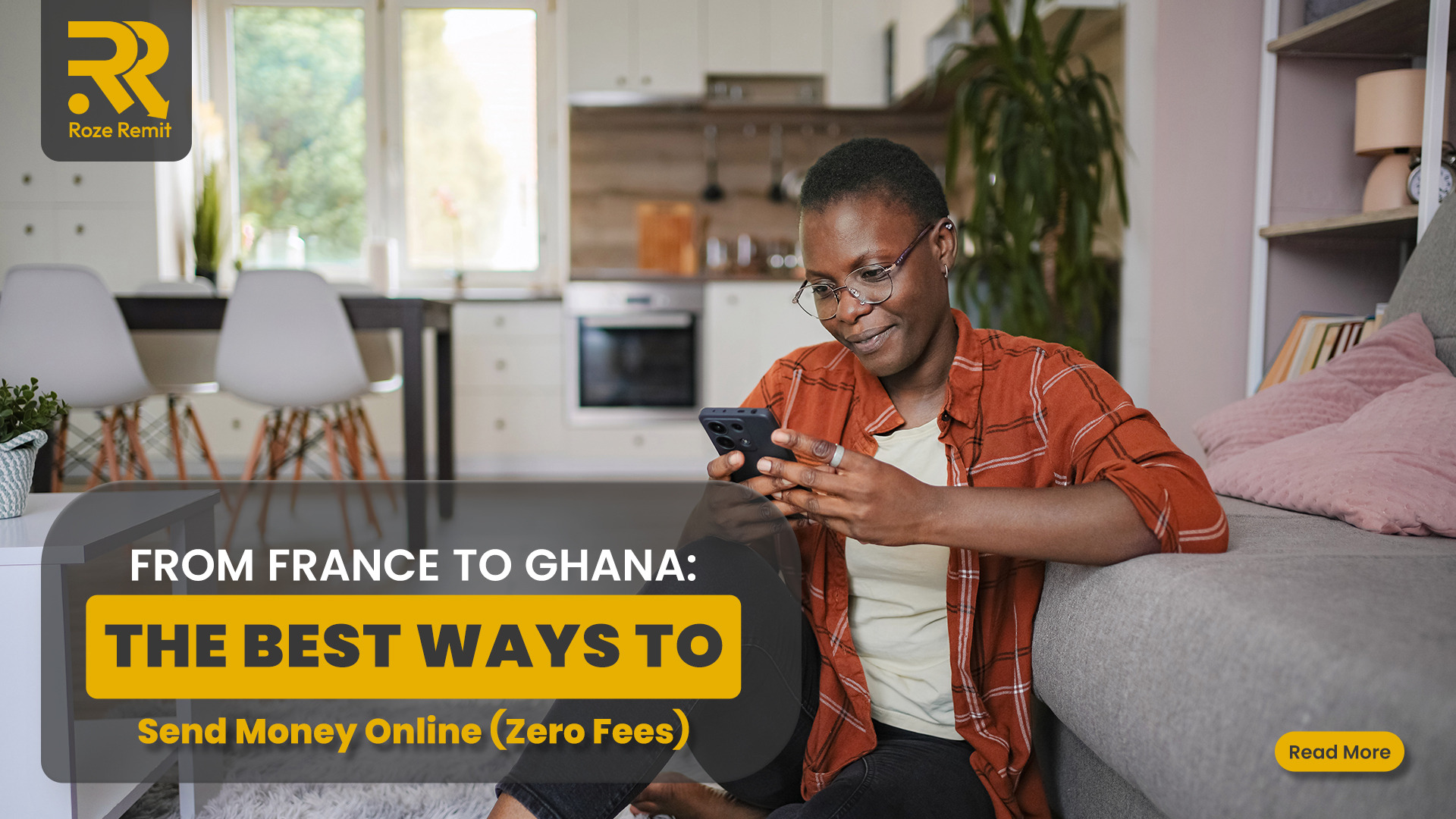
Every month, thousands of people send money from France to Ghana to support families, pay school fees, cover medical expenses, or fund businesses. The France to Ghana transfer corridor is one of the most active remittance routes between Europe and West Africa.
People send money from France to Ghana to support family expenses such as groceries, rent, utilities, school fees, medical bills, business payments, and emergencies through reliable money transfer to Ghana services. Because many of these transfers are essential and recurring, cost, speed, and reliability are critical factors when choosing a money transfer to Ghana provider.
How a France to Ghana Transfer Works
When you send money from France to Ghana online, the process is digital and automated. Unlike traditional bank wires, online money transfer platforms operate through specialised payment networks.
What Happens Behind the Scenes
You pay in EUR (euros) using your card or bank account.
The provider converts EUR to GHS (Ghanaian cedis).
The equivalent GHS amount is paid out locally in Ghana via:
Mobile money wallet
Bank deposit
Cash pickup
Most online France to Ghana transfers are completed within minutes if sent to mobile wallets.
How EUR Converts to GHS During an Online Transfer
Understanding currency conversion is essential when you send money from France to Ghana.
Step-by-Step Currency Conversion Example
Let’s assume:
Mid-market rate: 1 EUR = 14 GHS
You send: €100
At the mid-market rate, the recipient would receive:
€100 × 14 = 1,400 GHS
However, providers rarely use the exact mid-market rate. Instead, they apply a currency spread.
Example with a spread:
Offered rate: 1 EUR = 13.6 GHS
Recipient receives:
€100 × 13.6 = 1,360 GHS
The 40 GHS difference is effectively the provider’s margin.
This is why the exchange rate matters more than the advertised “zero fee.”
The Real Cost of Sending Money from France to Ghana
When evaluating a France to Ghana transfer, focus on total cost — not just transfer fees.
Cost Breakdown
When you send money from France to Ghana, costs typically come from:
Transfer fee (flat or percentage-based)
Exchange rate margin (spread)
Intermediary bank fees (common with banks)
Some platforms advertise “zero fees,” but instead adjust the exchange rate slightly. This model can still be competitive — as long as the rate remains fair.
What to Check Before Sending
Compare the offered exchange rate to the mid-market rate.
Check the final GHS amount the recipient will receive.
Confirm whether additional receiving fees apply.
Transparency is key.
Banks vs Digital Platforms for France to Ghana Transfers
If you want to send money from France to Ghana, you generally choose between traditional banks and online money transfer services.
Here’s a structured comparison:
1. Speed
Banks
3–5 business days
Possible delays due to correspondent banks
Digital Platforms
Often instant to mobile money
Same-day bank deposits in many cases
2. Fees
Banks
Flat transfer fees (€15–€40 typical)
Possible intermediary bank deductions
Digital Platforms
Often, low or zero upfront fees
Revenue is typically built into the exchange rate
3. Exchange Rate Transparency
Banks
Exchange margin is often unclear
Harder to compare the real rate
Digital Platforms
Display rate before confirmation
Show exact GHS payout amount
4. Accessibility
Banks
Require full bank details
Limited access in rural Ghana
Digital Platforms
Support mobile money wallets
No need for the recipient to visit a bank
For most users sending money from France to Ghana, digital platforms are faster and often more cost-effective.
Is It Really Possible to Send Money from France to Ghana with Zero Fees?
Yes — but “zero fees” does not mean zero cost.
Most providers earn revenue through:
A small currency spread
Volume-based exchange margins
As long as the rate remains competitive and clearly shown before payment, this model can still be affordable.
Always calculate the effective rate rather than focusing only on advertised fees.
Safety and Trust: How Secure Is a France to Ghana Transfer?
When sending money internationally, security is essential.
What Makes a Platform Trustworthy?
Regulation in Europe (e.g., licensed payment institution)
Compliance with Ghanaian financial regulations
Identity verification (KYC procedures)
Encrypted payment systems
Fraud monitoring systems
Most legitimate platforms require identity verification before allowing large money transfers online. This protects both sender and recipient.
Realistic Transfer Timelines
Mobile money: Minutes
Bank deposit: Same day or 1–2 business days
First transfer: May take longer due to identity checks
Delays are usually linked to verification or bank processing — not lost funds.
Step-by-Step Guide: How to Send Money from France to Ghana
Here’s a clear process you can follow:
Choose a provider that supports France to Ghana transfers.
Enter the amount in EUR.
Review the exchange rate and final GHS payout.
Select delivery method:
Mobile money
Bank deposit
Cash pickup
Enter recipient details.
Verify your identity (if required).
Confirm and send.
Always review the final payout amount before confirming.
Common Mistakes to Avoid
When sending money from France to Ghana, avoid these errors:
Focusing only on transfer fees and ignoring exchange rates
Using traditional banks without comparing digital alternatives
Sending large amounts without verifying the provider’s regulations
Ignoring daily exchange rate fluctuations
Entering incorrect mobile money or bank details
Comparing two providers before you transfer money online for free can significantly reduce costs.
Why Mobile Money Is Popular in Ghana
Mobile money plays a major role in France to Ghana transfers.
Reasons include:
Widespread usage across urban and rural areas
Instant access to funds
No need for a traditional bank account
Easy withdrawals at local agents
For many recipients, mobile wallets are the fastest and most practical way to receive funds.
Final Thought
Sending money from France to Ghana is no longer a complex or slow process. By understanding how exchange rates work, comparing banks versus digital platforms, and checking transparency before confirming payment, you can make informed financial decisions.
Focus on total cost, speed, and regulation — not just advertised fees. A well-chosen money transfer to Ghana service can help ensure your money arrives quickly, securely, and at a fair exchange rate.
FAQs
What is the cheapest way to send money from France to Ghana?
Digital platforms with competitive exchange rates and transparent pricing are usually more affordable than banks.
Are there hidden costs when I send money from France to Ghana?
The main hidden cost is usually the exchange rate margin. Always compare the offered rate to the mid-market rate.
How long does a France to Ghana transfer take?
Mobile money transfers often arrive within minutes. Bank transfers may take 1–2 business days.
Can exchange rates change before the transfer is completed?
Yes. Rates fluctuate daily. Some providers allow rate locking for a short period before payment.
Why was my transfer delayed?
Common reasons include identity verification checks, incorrect recipient details, or banking processing times.
Can I cancel a transfer after sending?
If the funds have not yet been paid out, cancellation may be possible. Once received by the recipient, cancellation is usually not possible.
Is it safe to send money from France to Ghana online?
Yes, if you use a regulated provider that follows European and Ghanaian financial compliance standards.
Related Articles


CONTACT US AT
▶ United Kingdom :
▶ Australia :
▶ Canada :
▶ Europe :
SEND MONEY